《榮耀六十年》講述什么樣的故事?
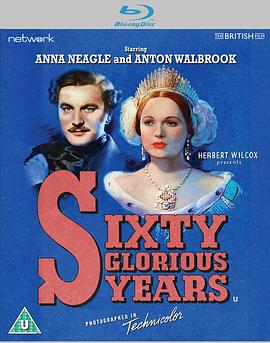
Sixty Glorious Years is an exercise in the creation of iconography, both for Victoria and its star, Anna Neagle (who subsequently became known as 'Regal Neagle'). Just as Elizabeth I commissioned artists to create flattering iconic images for public consumption, so this film performs a similar function, for Neagle is more beautiful than the real life Victoria. Controversial events (such as the 'Irish problem') are omitted and unpleasant aspects of Victoria's character (her petulance, arrogance, favouritism and 'right to privilege') are glossed over as endearing little 'whims'. Albert acts as a moderating influence when she goes too far. The film followed a year after the highly successful Victoria the Great (d. Herbert Wilcox, 1937). Again the screenplay is by Miles Malleson and Robert Vansittart, and many of the supporting cast (the cream of acting talent of period) repeat their roles, this time for the colour cameras. This was the first full length Technicolor film of cinematographer Freddie Young, who captures the spectacle of royal weddings, grand balls and opulent interiors, with scenes actually filmed at royal palaces. Vivid battle scenes, set in Alexander Korda's empire territory (Sevastopol and the Sudan), rival those in The Four Feathers (d. Zoltan Korda 1939). The title music sets the tone a regal choir sings over a shot of the crown. Elgar's 1901 'Pomp and Circumstance' march is heard during the diamond jubilee celebrations and, as Victoria's coffin lies in state, the film concludes with Anthony Collins' stately music accompanied by the text of Rudyard Kipling's 'Lest we forget'. Combined with the emotional appeal of scenes of Victoria connecting with her 'ordinary folk', this is stirring stuff. The film connects with contemporary events of 1938. The release of two celebratory royal films was intended to boost public affection for the monarchy in the wake of Edward VIII's abdication. Anglo-German relations were another touchy subject. With another war on the horizon, influential voices wanted appeasement, and the film could be seen to fit that agenda. Victoria herself was of mainly German descent, nicknamed 'the grandmother of Europe', while Albert is a 'good German', charmingly played by Anton Walbrook as a cultured, decent man. Sixty Glorious Years now seems unduly formal and reverential. Had movies existed during Victoria's reign (they only emerged at the end) this might have been the kind of film produced. Unlike Mrs Brown (d. John Madden, 1997), it is all so very 'Victorian'. Roger Philip Mellor
1、《榮耀六十年》是在哪一年上映的?
《榮耀六十年》是Herbert,Wilcox于1938年拍攝上映的一部經典劇情片。此片開創了英國當代劇情片的先河,《榮耀六十年》上映時票房穩坐國內外前三,創下當年最佳紀錄。在當時Anna,Neagle,Anton,Walbrook,C.,Aubrey,Smith,Walter,Rilla均為最佳演員,Anna,Neagle,Anton,Walbrook,C.,Aubrey,Smith,Walter,Rilla以精彩演技和完美的形象,奠定在英國影視地位。Anna,Neagle,Anton,Walbrook,C.,Aubrey,Smith,Walter,Rilla飾演角色多年后仍為大眾爭相模仿。Herbert,Wilcox之前曾被人懷疑其能力,而《榮耀六十年》卻奠定Herbert,Wilcox劇情片風格。《榮耀六十年》首映時曾獲海外劇情片和媒體廣泛好評,被認為其優秀程度,是足以與同時期(指1980年代)好萊塢(好萊塢)優秀劇情片齊名。
2、被稱為劇情片的開先河之作的《榮耀六十年》,是Herbert,Wilcox最好的作品嗎?
從Herbert,Wilcox斬獲劇情片最佳導演 我就覺得這部《榮耀六十年》是他最好的劇情片。雖然Herbert,Wilcox后來還拍出來了評價特別好的劇情片,但是《榮耀六十年》是他劇情片的代表作品。
3、《榮耀六十年》為什么能成為經典之作?
提起英國劇情片,人們就肯定會說出《榮耀六十年》的名字。這部由Herbert,Wilcox導演,Anna,Neagle,Anton,Walbrook,C.,Aubrey,Smith,Walter,Rilla主演的《榮耀六十年》,在當時,真的是成為了一匹黑馬,殺出了一條血路,創造了一個奇跡。為何會這么說,我想,就連Herbert,Wilcox導演和Anna,Neagle,Anton,Walbrook,C.,Aubrey,Smith,Walter,Rilla,都沒想到這部劇情片會得到這樣好的反響。Herbert,Wilcox先生曾說過,這是一群失意的人湊到了一起創作出來的一部作品。因為在《榮耀六十年》開拍之前,Anna,Neagle,Anton,Walbrook,C.,Aubrey,Smith,Walter,Rilla已經有4年無戲可拍,而Anna,Neagle,Anton,Walbrook,C.,Aubrey,Smith,Walter,Rilla主演的劇情片,票房始終不理想,這樣的幾個人湊在了一起,也真是緣分!所以,正是這樣的失意感和強烈的自尊心,他們在劇情片中投入的熱情,是我們難以想象的,其實《榮耀六十年》中的人物心理歷程和感人的劇情,何嘗不是現實中他們的真實寫照呢?所以,他們懷著一腔心有不甘的英雄氣,用他們的實力和人情成就了這部經典劇情片,也成就了他們自己!
4、如何評價《榮耀六十年》?
《榮耀六十年》口碑非常好深受廣大觀眾喜愛,《榮耀六十年》一經播放立刻引來無數人關注,不僅Anna,Neagle,Anton,Walbrook,C.,Aubrey,Smith,Walter,Rilla演的好而且該劇情片故事情節也非常緊湊,神馬影院(www.125my.com)觀看起來特別流暢同時還能扣人心弦,即使目前《榮耀六十年》收視率不佳但是該片目前受歡迎程度已經蒸蒸日上。該劇情片主演Anna,Neagle,Anton,Walbrook,C.,Aubrey,Smith,Walter,Rilla,她在該劇情片中的演技可圈可點,受到Anna,Neagle,Anton,Walbrook,C.,Aubrey,Smith,Walter,Rilla演的好而且該劇情片迷的認可。
5、《榮耀六十年》劇情片的主要內容
《榮耀六十年》是一部劇情片劇情片,由導演:Herbert,Wilcox執導,主演:Anna,Neagle,Anton,Walbrook,C.,Aubrey,Smith,Walter,Rilla,
Sixty Glorious Years is an exercise in the creation of iconography, both for Victoria and its star, Anna Neagle (who subsequently became known as 'Regal Neagle'). Just as Elizabeth I commissioned artists to create flattering iconic images for public consumption, so this film performs a similar function, for Neagle is more beautiful than the real life Victoria. Controversial events (such as the 'Irish problem') are omitted and unpleasant aspects of Victoria's character (her petulance, arrogance, favouritism and 'right to privilege') are glossed over as endearing little 'whims'. Albert acts as a moderating influence when she goes too far. The film followed a year after the highly successful Victoria the Great (d. Herbert Wilcox, 1937). Again the screenplay is by Miles Malleson and Robert Vansittart, and many of the supporting cast (the cream of acting talent of period) repeat their roles, this time for the colour cameras. This was the first full length Technicolor film of cinematographer Freddie Young, who captures the spectacle of royal weddings, grand balls and opulent interiors, with scenes actually filmed at royal palaces. Vivid battle scenes, set in Alexander Korda's empire territory (Sevastopol and the Sudan), rival those in The Four Feathers (d. Zoltan Korda 1939). The title music sets the tone a regal choir sings over a shot of the crown. Elgar's 1901 'Pomp and Circumstance' march is heard during the diamond jubilee celebrations and, as Victoria's coffin lies in state, the film concludes with Anthony Collins' stately music accompanied by the text of Rudyard Kipling's 'Lest we forget'. Combined with the emotional appeal of scenes of Victoria connecting with her 'ordinary folk', this is stirring stuff. The film connects with contemporary events of 1938. The release of two celebratory royal films was intended to boost public affection for the monarchy in the wake of Edward VIII's abdication. Anglo-German relations were another touchy subject. With another war on the horizon, influential voices wanted appeasement, and the film could be seen to fit that agenda. Victoria herself was of mainly German descent, nicknamed 'the grandmother of Europe', while Albert is a 'good German', charmingly played by Anton Walbrook as a cultured, decent man. Sixty Glorious Years now seems unduly formal and reverential. Had movies existed during Victoria's reign (they only emerged at the end) this might have been the kind of film produced. Unlike Mrs Brown (d. John Madden, 1997), it is all so very 'Victorian'. Roger Philip Mellor
6、《榮耀六十年》是Herbert,Wilcox導演的一部經典的劇情英國片大全,該劇講述了:Sixty Glorious Years is an exercise in the creation of iconography, both for Victoria and its star, ,想看更多的相關影視作品,請收藏我們的網站:www.125my.com
Sixty Glorious Years is an exercise in the creation of iconography, both for Victoria and its star, Anna Neagle (who subsequently became known as 'Regal Neagle'). Just as Elizabeth I commissioned artists to create flattering iconic images for public consumption, so this film performs a similar function, for Neagle is more beautiful than the real life Victoria. Controversial events (such as the 'Irish problem') are omitted and unpleasant aspects of Victoria's character (her petulance, arrogance, favouritism and 'right to privilege') are glossed over as endearing little 'whims'. Albert acts as a moderating influence when she goes too far. The film followed a year after the highly successful Victoria the Great (d. Herbert Wilcox, 1937). Again the screenplay is by Miles Malleson and Robert Vansittart, and many of the supporting cast (the cream of acting talent of period) repeat their roles, this time for the colour cameras. This was the first full length Technicolor film of cinematographer Freddie Young, who captures the spectacle of royal weddings, grand balls and opulent interiors, with scenes actually filmed at royal palaces. Vivid battle scenes, set in Alexander Korda's empire territory (Sevastopol and the Sudan), rival those in The Four Feathers (d. Zoltan Korda 1939). The title music sets the tone a regal choir sings over a shot of the crown. Elgar's 1901 'Pomp and Circumstance' march is heard during the diamond jubilee celebrations and, as Victoria's coffin lies in state, the film concludes with Anthony Collins' stately music accompanied by the text of Rudyard Kipling's 'Lest we forget'. Combined with the emotional appeal of scenes of Victoria connecting with her 'ordinary folk', this is stirring stuff. The film connects with contemporary events of 1938. The release of two celebratory royal films was intended to boost public affection for the monarchy in the wake of Edward VIII's abdication. Anglo-German relations were another touchy subject. With another war on the horizon, influential voices wanted appeasement, and the film could be seen to fit that agenda. Victoria herself was of mainly German descent, nicknamed 'the grandmother of Europe', while Albert is a 'good German', charmingly played by Anton Walbrook as a cultured, decent man. Sixty Glorious Years now seems unduly formal and reverential. Had movies existed during Victoria's reign (they only emerged at the end) this might have been the kind of film produced. Unlike Mrs Brown (d. John Madden, 1997), it is all so very 'Victorian'. Roger Philip Mellor
 猜你喜歡
猜你喜歡